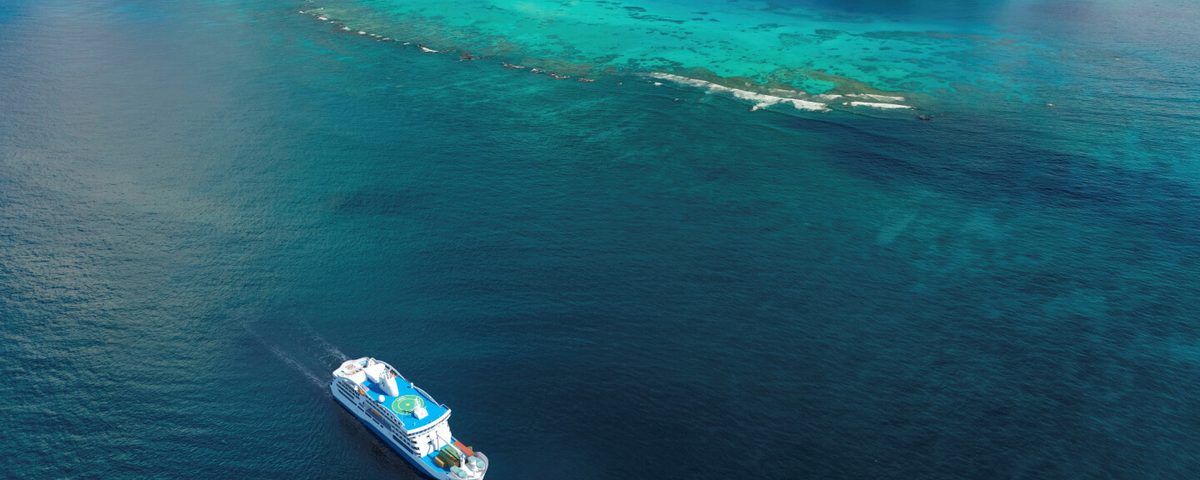
In partnership with Aranui Cruises
Cargo, Culture and a New Ship: Sailing French Polynesia’s Far Islands with Aranui Cruises
October 26, 2026
Most cruise ships arrive somewhere to visit. The Aranui arrives because the island is waiting for it.
When the ship comes into a bay in the Marquesas, people are already on the dock holding the slips for whatever they ordered from Papeete: building timber, a pallet of groceries, a new outboard motor, school supplies, sometimes a car. The cranes start swinging, the forklifts come out of the hold, and the passengers line the upper decks to watch. Then they go ashore to meet the same community the ship just supplied.
That is the Aranui idea, and it has been working since long before anyone called it “immersive travel.”
A supply ship that learned to carry travelers
Aranui began in 1959 as a lifeline to the Marquesas, the most remote islands in French Polynesia, roughly 1,400 kilometers northeast of Tahiti. Flights there are few and small, and nearly everything the islands need still arrives by sea. In 1984 the company started taking passengers along for the ride. The earliest voyages were simple: about 20 cabins, some with shared bathrooms down the hall, and a “deck passage” category for travelers happy to sleep under the stars.
Today’s ship, the purpose-built Aranui 5, has sailed since 2015. It is very much a cargo ship up front, with cranes, holds and barges, and very much a small cruise ship at the back, with a pool, two bars, a spa, balcony cabins and suites. She carries up to about 230 passengers, and two separate crews run her: the seamen who handle the freight, and a hotel crew who look after guests. Most of both are Polynesian, many of them Marquesan, and the ship’s band is made up of crew members on ukulele, drums and, occasionally, spoons.
The mission hasn’t changed. Aranui still exists first to keep the Marquesas supplied, and medical equipment and school supplies for island children ride along at no charge.
Twelve days to the Marquesas
The classic Aranui 5 voyage is 12 days round trip from Papeete. After a stop in Fakarava in the Tuamotus and a day and a half at sea, the ship calls at all six inhabited Marquesas islands: Nuku Hiva, Ua Pou, Ua Huka, Hiva Oa, Tahuata and Fatu Hiva. On the way home it stops at Rangiroa and then Bora Bora, where you can leave the ship and stay on for a few nights if you’d like to end with an overwater bungalow.
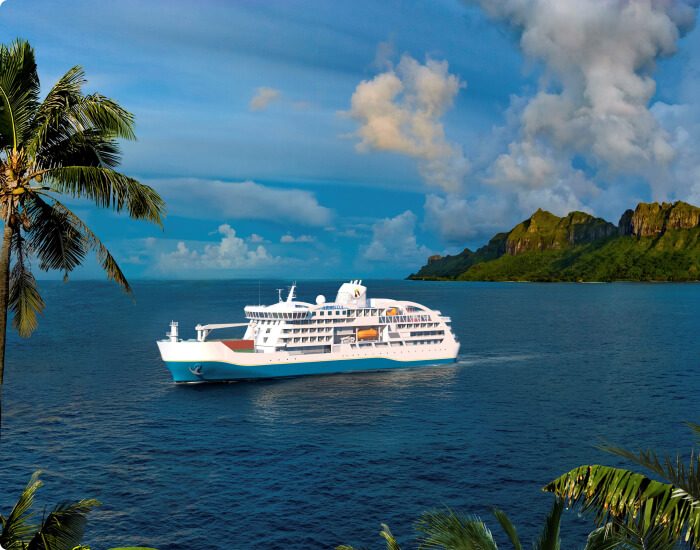
These are not lagoon islands. The Marquesas are the youngest in French Polynesia: sheer volcanic peaks, valleys thick with breadfruit and mango, waterfalls, and villages tucked into the bays. One Aranui host likes to call them the Grand Canyon with vegetation. In 2024 UNESCO added the Marquesas to its World Heritage list, both for their landscapes and for a culture unlike anything else in Polynesia. Marquesans have their own language, and you’ll be welcomed with kaoha rather than the Tahitian ia ora na.
That culture is the heart of the trip. The word tattoo is generally traced to this part of the Pacific, and the Marquesas are known for their carving in wood, stone and bone, for tapa cloth beaten from tree bark, and for dances like the bird dance of Ua Pou. Along the way, the voyage typically includes:
- Ancient sites. Guides lead visits to me’ae and tohua, ceremonial platforms built around towering banyan trees, with stone tiki still standing watch. On Hiva Oa, that includes the large archaeological site in the hills above the village of Puamau.
- Gauguin and Brel. The painter Paul Gauguin spent his last years in Atuona on Hiva Oa and is buried there, as is the Belgian singer Jacques Brel.
- Churches and carvers. Marquesan Catholic churches are full of remarkable local woodwork, and every island has craft markets and carvers’ workshops.
- Hikes and 4x4s. The best known is the walk over the mountains on Fatu Hiva between Omoa and Hanavave, through one of the most dramatic landscapes in the South Pacific. A 4x4 option covers the same island for guests who would rather ride.
- Polynesian night. Barbecues and dancing on deck, a traditional meal cooked in an earth oven, and the crew’s own band.
One thing worth knowing: excursions ashore are run by the islands’ own communities, from the 4x4 drivers waiting on the dock to the family restaurants where lunch is served. When you travel with Aranui, your money stays in the valleys you visit.
What life aboard is like
Breakfast, lunch and dinner are included, along with wine at lunch and dinner. Meals are family style, with a set menu each day and long tables shared with fellow passengers, which is how most people end up making friends. Plenty of the cooking leans on what the islands grow and catch: tuna, mahi mahi, mango, banana, and poisson cru, raw fish in lime and coconut milk. Dietary needs, from gluten-free to vegetarian, are handled by the hotel crew when you board.
Guests are a mix of English, French and German speakers, and each language group has its own guide and a nightly briefing on the next day’s plan. Lecturers cover Polynesian navigation, Marquesan history and the ship’s own cargo story. The bridge is open to passengers who ask first. There is Starlink Wi-Fi at set times of day, and some islands, like Nuku Hiva, have cafés with fiber-optic internet ashore.
Aranoa: a second ship, and a new archipelago
For the first time in its history, Aranui will soon run two ships at once. Aranoa was delivered from the Huanghai shipyard in China on September 28, 2026, the same yard that built Aranui 5. She is a little smaller, at 116 meters, and carries up to 198 passengers in 91 cabins, 62 of them with private balconies, with a crew of around 100. That’s roughly one crew member for every two guests.
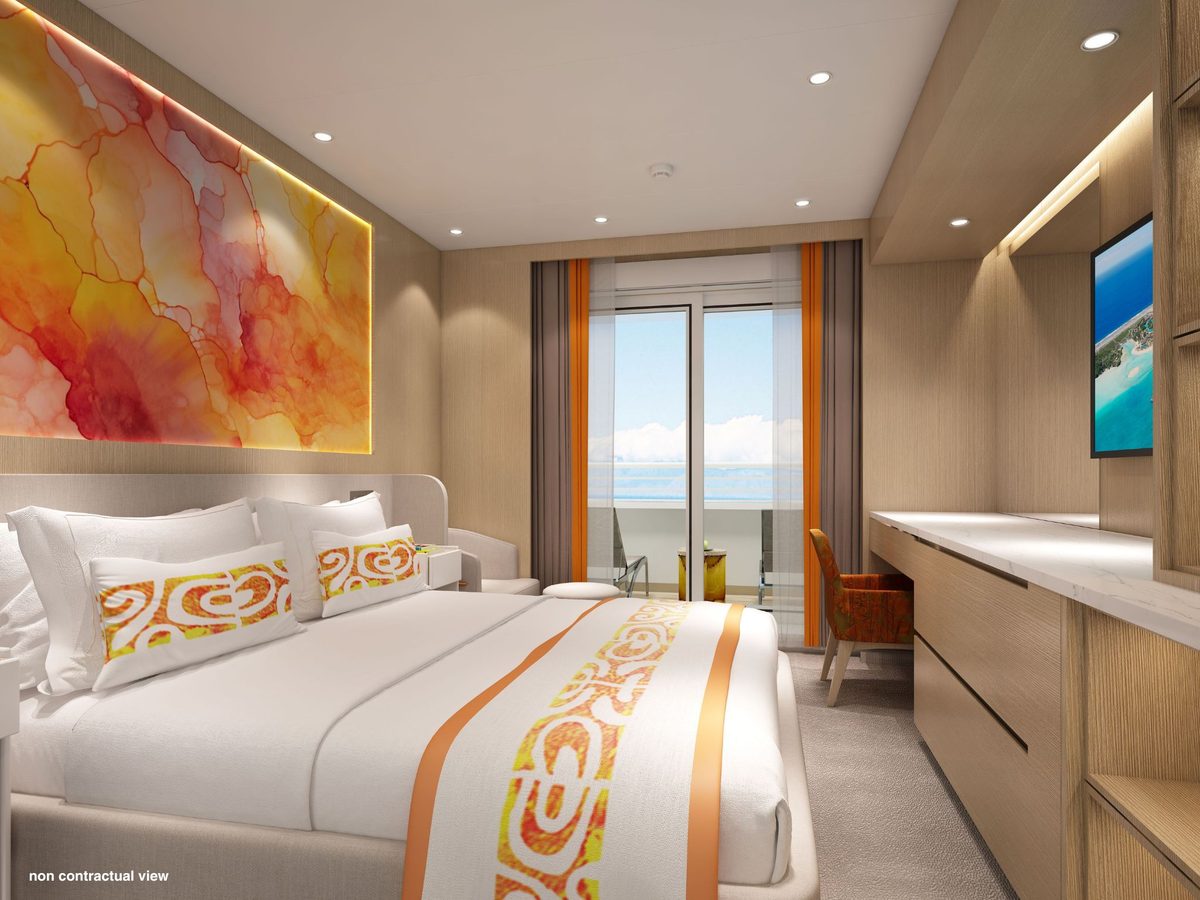
Aranoa keeps the Aranui formula, passengers and freight together, but points it south. From 2027 she sails 13-day voyages to the Austral Islands, French Polynesia’s southernmost and least-visited archipelago, about 600 kilometers south of Tahiti. Fewer people live there, so she carries less cargo than her sister. Itineraries take in Tubuai, Raivavae and Rimatara, along with Society Islands stops including Raiatea, home of the UNESCO-listed marae of Taputapuātea, and Bora Bora. Six of the 2027 departures also reach Rapa, one of the most isolated inhabited islands on earth; the others add Maupiti or Huahine instead.
The ship is designed for those waters, too. The southern Pacific can send long swells up from low-pressure systems in the far south, so Aranoa is fitted with stabilizers, something Aranui 5 doesn’t have. She also uses dynamic positioning, which holds the ship in place with her engines and thrusters so she doesn’t need to drop anchor on fragile seabeds. On board there are two restaurants, two bars, a pool, two sea-view Jacuzzis, a gym, a boutique and a spa with its own tattoo studio.
I’ll be aboard Aranoa in December, when she hosts the 2026 Tahiti Travel Exchange in Papeete, and I can’t wait to experience Aranui for myself. I’ll share what I find.
Good to know before you go
- It’s a working ship. Arrival times can shift with the cargo and the weather. That flexibility is part of the deal, and part of the charm. Captains will adjust routes for comfort and safety.
- Expect some motion. Aranui 5 has no stabilizers, and the open Pacific can be lively. If you’re prone to seasickness, bring your remedy of choice, and consider Aranoa’s Austral voyages once she’s in service.
- Landings can be an adventure. Where there’s no pier, you’ll go ashore by whaleboat, with crew helping you step on and off. Sturdy sandals that can get wet are a must.
- Bring some cash. Pacific francs (XPF) are handy for craft markets on remote islands. The ATM at Faa’a airport in Papeete is the easiest place to get them, though you can also exchange money on board.
- Hiking, not lagooning. The Marquesas reward walkers and the curious more than sunbathers. You’ll swim and snorkel in Fakarava, Rangiroa and Bora Bora.
- Plan a night in Papeete. Arrive a day early in case of flight delays, visit the Museum of Tahiti and the Islands, and eat at the roulottes, the food trucks on the waterfront.
Why it lasts
Aranui has lasted more than 40 years as a passenger line because it was never just a cruise line. The ship shows up because the islands need it, and travelers get to come along: to watch a village unload its month’s supplies, to be welcomed in a language few visitors ever hear, and to see places most people only find on a map. Now, with Aranoa heading south, there’s a whole new archipelago to discover.